
HCMC to build 7 steel flyovers overpasses worth over 2,700 billion VND in 2027
HCMC is studying the investment of 7 steel flyovers overpasses at frequently congested interchanges in the central area and the former Binh Duong, Ba Ria – Vung Tau areas.
The preliminary total investment capital of the projects is estimated at over 2,700 billion VND, with the goal of completion and operation from now until 2027.
This is a group of transport projects identified by HCMC as a priority to solve traffic bottlenecks, shorten travel time, and improve connectivity between the city center and industrial parks, seaports, and satellite cities.
HCMC prioritizes resolving congestion hotspots
After expanding its development space, the demand for travel and cargo transportation between the center of HCMC and Binh Duong, Dong Nai, and Ba Ria – Vung Tau is increasingly growing.
Many existing interchanges are having to accommodate a volume of vehicles exceeding their design capacity, especially during rush hours. This situation not only affects people’s travel time but also increases logistics costs, impacting the operations of industrial parks and the seaport system.
According to the plan being studied, 7 steel overpasses will be located at intersections with high traffic density, including three projects in the central area and four projects in the former Binh Duong and Ba Ria – Vung Tau areas. The preliminary total investment capital of the entire project group exceeds 2,700 billion VND.
List of proposed locations for building 7 steel flyovers overpasses in HCMC
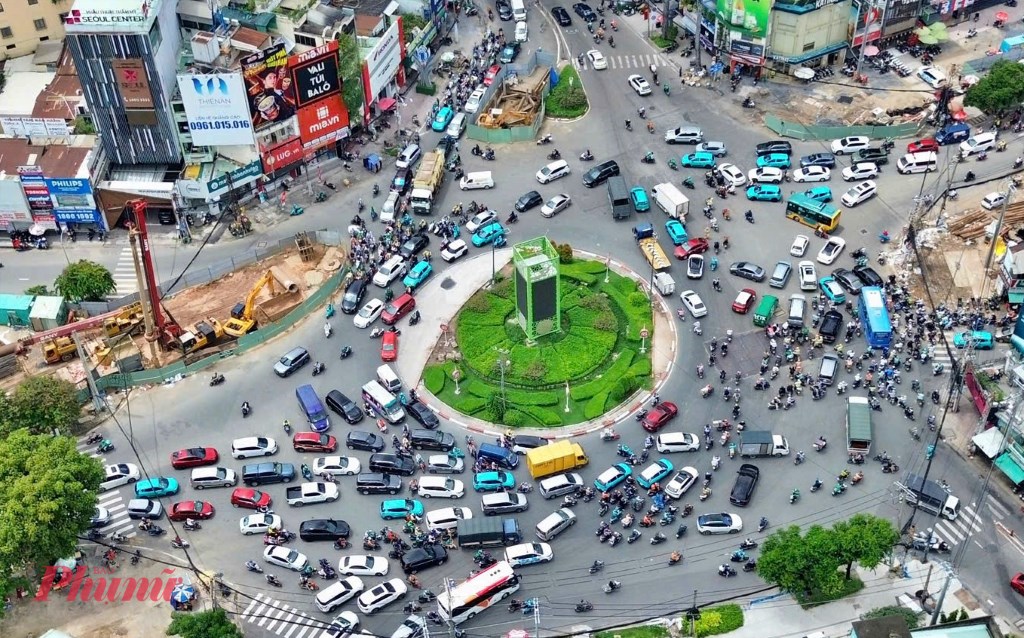
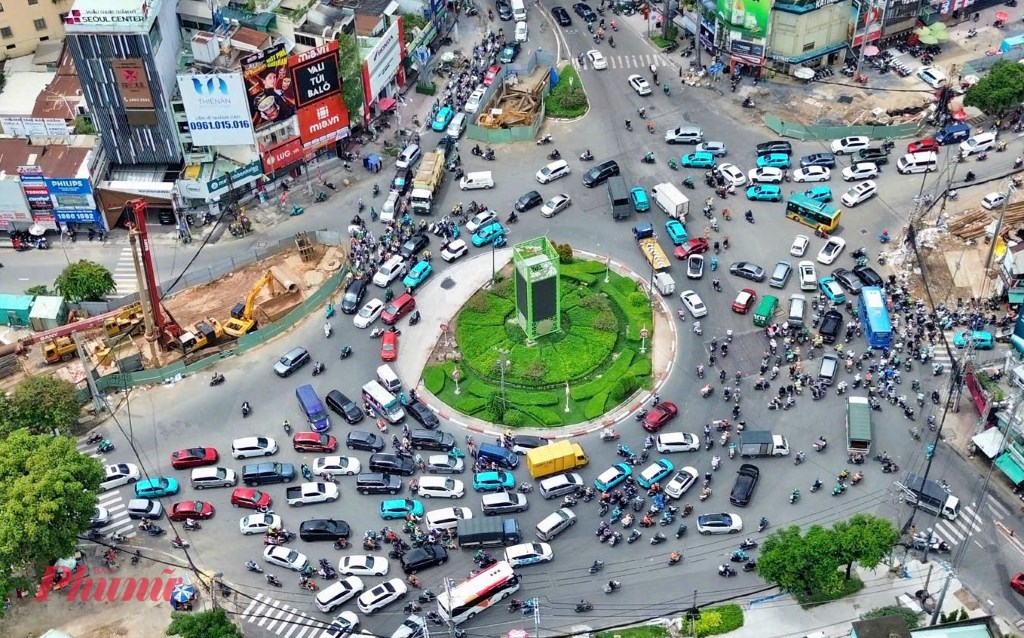
1. Steel overpass at Dan Chu Roundabout
The steel overpass at the six-way Dan Chu Roundabout is being studied to connect Ba Thang Hai Street with Cach Mang Thang Tam Street.
According to the preliminary plan, the bridge is about 560m long, 9m wide, arranged with two mixed-use lanes, and has a total investment capital of nearly 230 billion VND.
Dan Chu Roundabout is the intersection of six major roads, including:
- Vo Thi Sau
- Cach Mang Thang Tam
- Ba Thang Hai
- Ly Chinh Thang
- Nguyen Phuc Nguyen
- Nguyen Thuong Hien
This is one of the intersections with a large volume of traffic in the central area. The construction of the Ben Thanh – Tham Luong metro line also adds pressure to the traffic situation in this area.
The overpass plan needs to be studied synchronously with the underground station of the metro line, urban landscape, and existing structures along both sides of the road.
2. Ba Thang Hai – Le Dai Hanh overpass
An overpass at the Ba Thang Hai – Le Dai Hanh intersection is proposed to separate the straight-going traffic stream, limiting conflicts between traffic directions at the intersection.
The project is expected to be about 480m long, 9m wide, and have two mixed-use lanes. According to the latest preliminary data, the investment cost is about 200 billion VND.
This intersection is located near many commercial, sports facilities, and densely populated residential areas. During rush hours or major events, the volume of vehicles concentrated on Ba Thang Hai and Le Dai Hanh streets often increases sharply.
Once built, the overpass can help vehicles go straight through the intersection without having to wait for traffic lights, thereby reducing congestion spreading to adjacent roads.
3. Ba Thang Hai – Ly Thuong Kiet overpass
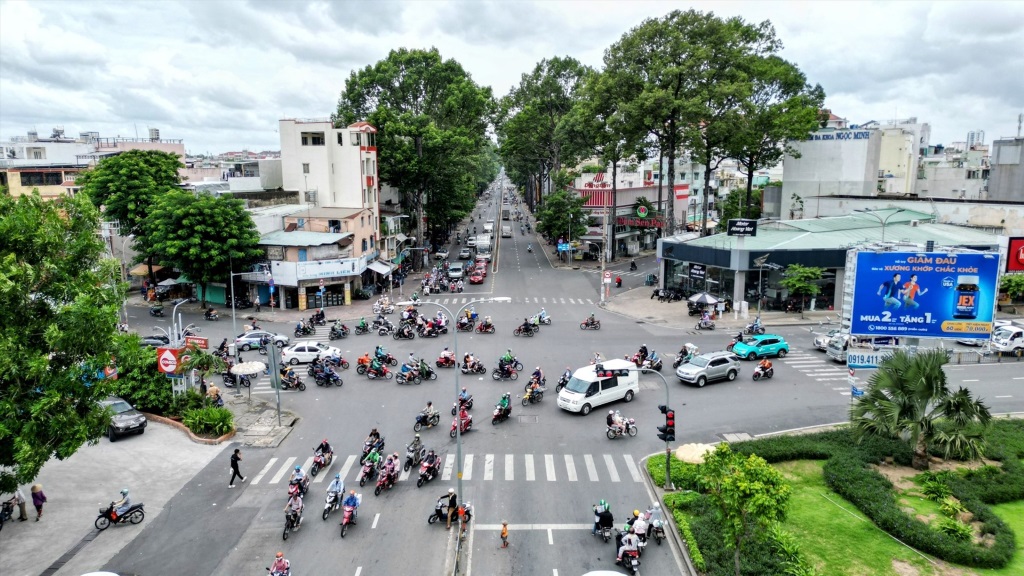
The third overpass in the central area is proposed to be built at the Ba Thang Hai – Ly Thuong Kiet intersection.
The project is expected to be about 320m long, 9m wide, with two mixed-use lanes and a preliminary total investment capital of about 187 billion VND.
Ly Thuong Kiet Street is one of the important traffic axes connecting many residential areas, schools, hospitals, and commercial centers. Meanwhile, Ba Thang Hai Street plays the role of connecting the central area with the western gateway of the city.
The overpass here is expected to combine with the existing Ba Thang Hai – Nguyen Tri Phuong overpass, gradually forming a continuous traffic axis on Ba Thang Hai Street.
4. Cach Mang Thang Tam – Huynh Van Cu overpass
In the former Binh Duong area, HCMC is studying to build a steel overpass at the Cach Mang Thang Tam – Huynh Van Cu intersection.
The project has a length of about 300m, arranges two lanes, and combines widening the road sections on both sides. The preliminary total investment cost is estimated at about 530 billion VND.
This is an intersection that plays a role in connecting the central area of Thu Dau Mot with routes heading towards HCMC and many neighboring residential and production areas.
Building the overpass not only resolves traffic conflicts at the intersection but can also increase the exploitation capacity of the entire Cach Mang Thang Tam axis.
5. National Highway 51 – Phuoc Binh street overpass
A steel overpass is proposed at the intersection between National Highway 51 and Phuoc Binh street, in the bordering area between HCMC and Dong Nai.
The project is expected to be about 280m long, arranging four lanes along with an approach road system at both ends. The preliminary total investment capital is about 530 billion VND.
National Highway 51 is an important inter-regional traffic axis, connecting industrial areas, seaports with Dong Nai, and Long Thanh international airport. The volume of trucks, container trucks, and personal vehicles on this route is frequently high.
The overpass at the Phuoc Binh interchange is expected to separate the straight-going traffic stream on National Highway 51, reducing conflicts with vehicles entering and exiting Phuoc Binh street.
6. National Highway 51 – My Xuan B1 Industrial Park overpass
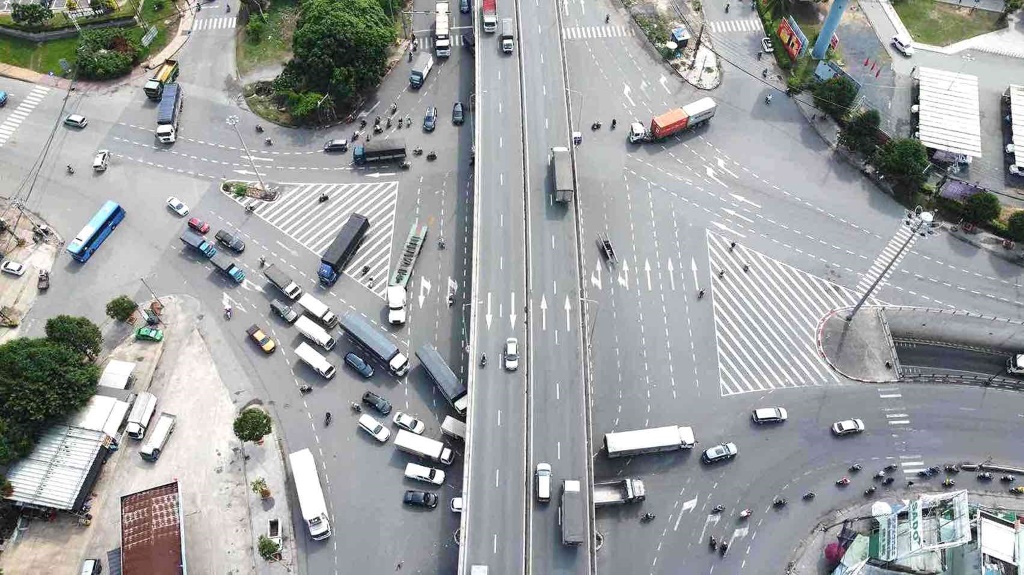
The second overpass on National Highway 51 is proposed at the intersection with street B1, the entrance area to My Xuan B1 Industrial Park.
The project is also being studied with a length of about 280m, a scale of four lanes, and a preliminary total investment capital of about 530 billion VND.
This area has a large volume of trucks and container trucks entering and exiting the industrial park. When streams of freight transport vehicles directly intersect with vehicles circulating on National Highway 51, the risk of congestion and traffic unsafety increases significantly.
The overpass will help separate the two traffic streams, simultaneously improving the connection between the industrial park and the port system and expressway network in the area.
7. DT.994C road – 30 Thang 4 street overpass
The remaining project is proposed at the intersection between DT.994C road and 30 Thang 4 street, the Eo Ong Tu area belonging to the former Ba Ria – Vung Tau.
According to the research plan, the bridge is about 280m long, with four lanes and an approach road system. The preliminary total investment capital is about 530 billion VND.
DT.994C road is part of the transport network connecting industrial areas, seaports, and coastal urban areas. Handling the intersection with 30 Thang 4 street will contribute to improving freight transport capacity, while simultaneously enhancing accessibility to urban areas and tourist destinations in the region.
Why does HCMC continue to choose steel overpasses?
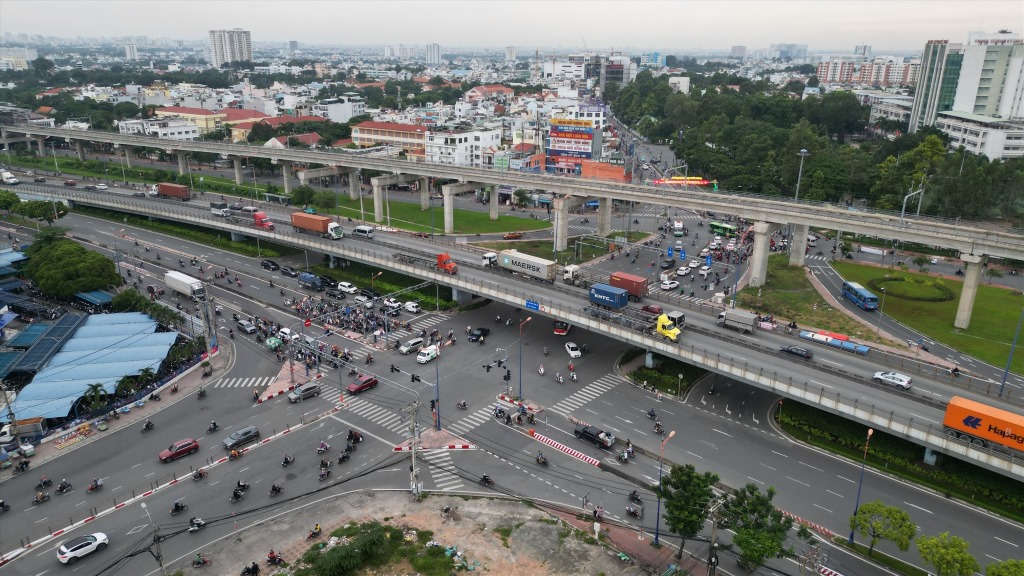
HCMC currently has 9 steel overpasses at major interchanges. The first two projects were put into use in 2013 at Thu Duc intersection and Hang Xanh.
Compared to reinforced concrete bridges or large-scale multi-level interchanges, steel overpasses have several notable advantages:
Short construction time: Steel components can be pre-manufactured and assembled directly at the construction site, helping to shorten construction time.
Reasonable investment cost: The project scale is usually smaller than underpass projects or complete interchanges.
Limiting site clearance: The bridge can be arranged within the median strip or the existing roadway.
Capable of dismantling and adjusting: The steel structure is suitable for areas that may continue to be renovated or build long-term transport works in the future.
Quickly reducing intersection conflicts: Overpasses help separate the straight-going traffic stream from turning traffic and vehicles circulating underneath.
In fact, overpasses at Hang Xanh, Thu Duc intersection, Nguyen Kiem – Pham Van Dong, Lang Cha Ca, and Cay Go have contributed to improving the traffic situation at many hot spots in the city.
Impact on inter-regional connectivity
A notable point of this plan is that the investment scope is not only concentrated in the inner city area but also expands to industrial and logistics axes.
The three overpasses in the former Ba Ria – Vung Tau area are all located on or near traffic routes serving freight transport. Once completed, the projects can support:
- Reducing waiting time at interchanges
- Increasing circulation capacity on National Highway 51
- Improving connections with industrial parks
- Supporting freight transport to the port system
- Enhancing accessibility to Dong Nai and Long Thanh airport
Expanding infrastructure investment and building 7 new steel overpasses in an inter-regional direction shows that HCMC is gradually shifting from solving local congestion to reorganizing the transport network on an expanded urban spatial scale.
How can real estate areas benefit when building 7 new steel overpasses in HCMC?
Transport infrastructure is one of the important factors affecting the exploitation capacity and use value of real estate.
In the central area, new overpasses can help improve travel time on the Ba Thang Hai – Cach Mang Thang Tam – Ly Thuong Kiet axis. Areas with high population density, major commercial activities, and convenient accessibility will have more conditions to exploit retail premises, offices, rental apartments, and urban services.
In the former Binh Duong and Ba Ria – Vung Tau areas, the impact may focus on real estate types associated with production and logistics such as:
- Industrial land
- Factories and warehousing
- Housing for experts and workers
- Commercial real estate along traffic axes
- Urban areas located near the inter-regional road system
However, an overpass project does not mean surrounding real estate prices will definitely increase. The ability to add value also depends on investment progress, land use planning, project legality, building density, amenity quality, and actual market demand.
Investors need a comprehensive assessment rather than just relying on information about an upcoming infrastructure project.
Expected completion and operation in 2027
According to the announced plan, the 7 steel overpasses project will be applied a mechanism for urgent transport works to shorten the investment preparation process.
HCMC aims to speed up procedures, start construction, and complete the works from now until 2027.
However, the parameters on length, scale, and total investment are currently just preliminary data. The official cost may be adjusted after completing the survey, design, appraisal, and project approval.
For projects located in densely populated areas, the city also needs to carefully calculate the traffic organization plan during construction to avoid causing additional congestion.
Conclusion
The plan to invest in 7 steel overpasses with a preliminary total capital of over 2,700 billion VND is part of the strategy to tackle traffic bottlenecks in HCMC during the 2026-2027 period.
The three overpasses in the central area will focus on relieving pressure on the Ba Thang Hai, Cach Mang Thang Tam, Le Dai Hanh, and Ly Thuong Kiet axes. Meanwhile, the remaining four bridges will support connecting the Binh Duong area, the industrial park system, National Highway 51, and the seaport network in the former Ba Ria – Vung Tau.
If implemented on schedule, the projects will not only help reduce congestion but also contribute to perfecting inter-regional connectivity, creating more momentum for urban development, commerce, logistics, and real estate in greater HCMC.